


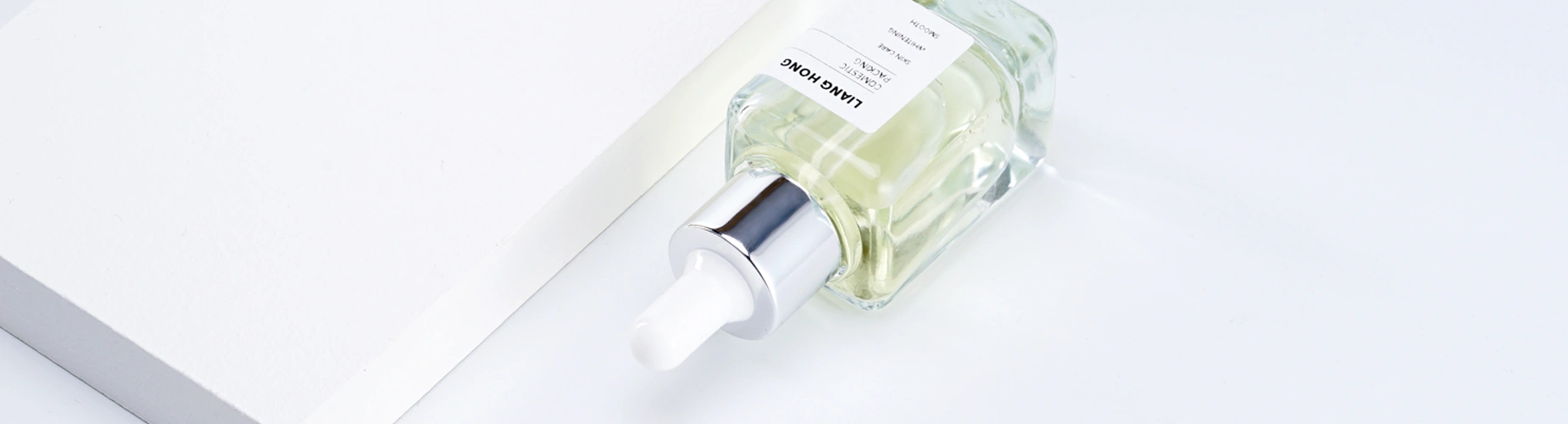
Glass Bottle Decoration Techniques: A Complete Guide to Screen Printing, Frosting, PVD & More
Reading time: 5 minutes
Introduction
Glass is a blank canvas waiting for your brand‘s signature. The right decoration transforms a simple container into a statement piece that customers remember. For premium cosmetics and fragrances, decoration isn’t just about looks—it‘s about telling your brand’s story, building perceived value, and standing out.
This guide covers the most widely used glass bottle decoration techniques used by professional suppliers in 2026. You‘ll learn how each method works, its best applications, cost considerations, and how decoration choices impact recyclability under evolving regulations like the EU’s PPWR.
Why Decoration Matters
Before a customer experiences the fragrance or formula, they see the bottle. A well-decorated bottle can:
Elevate perceived value and justify premium pricing
Strengthen brand identity through consistent visual language
Increase product differentiation in crowded retail environments
Support storytelling across marketing and social platforms
Create tactile and emotional connections through texture and finish
Many brands combine multiple decoration techniques to create a signature style—screen printing for the logo, hot stamping for metallic accents, and a frosted finish for soft, elegant texture.
Quick Comparison Overview
Here‘s how the most common decoration techniques compare across key criteria:
Screen Printing
Best for: Logos, text, solid graphics; high durability
Cost level: Low-Medium
MOQ range: 1,000+
Recyclability: Compatible (water-based inks)
Key feature: Thick ink layer, vibrant colors
Frosting / Acid Etching
Best for: Matte finish, luxury skincare, perfumes
Cost level: Medium-High
MOQ range: 3,000–10,000+
Recyclability: Fully compatible
Key feature: Soft touch, resists fingerprints
Spray Coating
Best for: Full-body color, gradient effects, any Pantone
Cost level: Medium
MOQ range: 3,000–5,000+
Recyclability: Depends on coating type
Key feature: Unlimited color options
Hot Stamping / Foiling
Best for: Metallic logos, accents, luxury detailing
Cost level: Medium
MOQ range: 1,000+
Recyclability: Compatible
Key feature: High-shine metallic finish
PVD / Metallization
Best for: Mirror gold/silver, full metallic bottles
Cost level: High
MOQ range: 10,000+
Recyclability: Compatible (PVD)
Key feature: Durable metallic mirror finish
UV / Digital Printing
Best for: Short runs, complex graphics, gradients
Cost level: Medium-High
MOQ range: 1,000+
Recyclability: Compatible
Key feature: No tooling, full-color photo quality
Embossing / Debossing
Best for: Tactile logos, long-term brand assets
Cost level: High (mold cost)
MOQ range: 30,000+
Recyclability: Fully compatible
Key feature: Permanent raised/recessed texture
1. Screen Printing – The Durable Foundation
Best for: Logos, text, solid graphics, high-volume production
Screen printing pushes ink through a fine mesh stencil directly onto the glass surface. Each color requires a separate screen and printing pass, but the result is a thick, opaque, remarkably durable finish that resists wear, moisture, and alcohol.
Luxury fragrance brands like Chanel and Dior rely on screen printing for gold and silver detailing on perfume bottles, using metallic inks to create raised textures that feel premium to the touch. High-temperature screen printing for glass spray bottles delivers water-resistant, scratch-resistant results ideal for high-end products.
Pros: Long-lasting, weather and chemical resistant, high color opacity, can create tactile raised effects, cost-effective at scale
Cons: High setup cost per color, not ideal for photo-realistic gradients, requires MOQ
Best applications: Brand logos, ingredient lists, safety markings, decorative patterns on medium to high-volume production runs
2. Frosting / Acid Etching – Soft-Touch Elegance
Best for: Luxury positioning, matte aesthetics, skincare, premium perfumes
Frosting is the leading finish for premium cosmetics and spirits. Achieved through acid etching or sandblasting, frosting creates a soft, matte surface that diffuses light beautifully. The result feels luxurious—often described as a “peach skin” or silky texture that resists fingerprints and creates an aura of mystery around the liquid inside.
At the 2026 Canton Fair, custom frosted glass bottles emerged as the dominant trend, with global buyers seeking matte finishes as the new benchmark for premium packaging across vodka, gin, limited-edition whiskeys, and luxury skincare.
Pros: Permanent finish (unlike coatings), soft-touch texture, hides fingerprints, doesn‘t hamper recyclability—frosted glass remains fully compatible with standard recycling streams
Cons: Higher cost than spray coatings, chemical disposal requirements, not all factories offer in-house acid etching
Technical note: Acid etching chemically alters the glass surface for a permanently uniform matte finish. Sandblasting uses high-pressure air with abrasive material to create a similar effect. Both methods produce durable, premium results
Best applications: Full frosted bottles, partial frosting combined with screen printing, gradient transitions, luxury skincare and perfume packaging
3. Spray Coating – Unlimited Color Possibilities
Best for: Full-body color, gradient effects, brand-specific Pantone shades
Spray coating is the most versatile way to add color and finish to glass bottles. A thin layer of paint or lacquer is sprayed onto the bottle surface, available in any Pantone color with finishes ranging from matte to glossy to pearl.
Modern spray coating increasingly uses water-based paints, reducing VOC emissions by up to 90% compared to solvent-based alternatives. Gradients and ombre effects—smooth transitions from dark to light—have become particularly popular for creating emotional, modern aesthetics.
Pros: Any color possible, gradient and multi-color effects, wide MOQ range, matte/gloss/pearl options
Cons: Can chip if poorly applied, may affect recyclability depending on coating chemistry, requires skilled application for consistency
Best applications: Full bottle color transformation, brand signature colors, seasonal collections, gradient designs for premium fragrances
Sustainability note: Water-based and organic silicone resin coatings are replacing older solvent-heavy formulations, with some innovations using recycled or bio-based resins to maintain circular economy compatibility
4. Hot Stamping / Foiling – Metallic Brilliance
Best for: Logo accents, metallic details, holiday editions, luxury positioning
Hot stamping transfers thin metallic or pigmented foil onto the bottle using heat and pressure. Gold, silver, rose gold, and copper are classics, but holographic and custom colored foils are gaining popularity for unique brand statements.
When combined with frosting or screen printing, hot stamping creates stunning contrast—a gold logo on frosted glass or a silver accent on deep midnight blue spray coating.
Pros: High-shine mirror finish, strong visual impact, lower MOQ than printing (500–1,000 pieces), works on curved and flat surfaces
Cons: Less durable than screen printing (thin foils may rub off over time), limited to simple shapes and lines
Best applications: Brand name foiling, logo highlighting, accent lines around bottle shoulders or necks, limited editions
5. PVD / Metallization – The Premium Mirror Finish
Best for: Full metallic bottles, mirror gold/silver effect, ultra-luxury positioning
Physical Vapor Deposition (PVD), also called vacuum metallization, applies an ultra-thin metallic film inside a vacuum chamber at low temperature. The result is a brilliant mirror-like gold, silver, rose gold, or other metallic finish—more durable and environmentally cleaner than traditional electroplating.
PVD achieves a uniform metallic luster across the entire bottle with excellent adhesion and no heavy-metal waste. At Paris Packaging Week 2026, SGD Pharma showcased PVD as a cutting-edge decoration technique that delivers high-end finishes while remaining compatible with glass recycling processes.
Pros: Mirror-quality metallic finish, very durable, consistent across surfaces, no heavy-metal waste, recyclability-compatible
Cons: Higher cost, requires specialized vacuum equipment, higher MOQ (typically 5,000–10,000 units)
Best applications: Full gold or silver bottle finishes for ultra-luxury perfumes, metallic caps and shoulders, high-end limited editions
6. UV / Digital Printing – Short Runs & Complex Graphics
Best for: Seasonal collections, limited editions, prototypes, small-batch customization
UV printing applies ink directly to the glass surface and cures it instantly with ultraviolet light. This modern technique supports high-resolution, multi-color artwork—including photo-realistic images, gradient blends, and variable data like names or QR codes.
UV printing requires no tooling or screens per color, making it ideal for small batch runs and rapid prototyping. Cylindrical UV printers can handle bottles, jars, and vases, providing efficient, flexible personalized solutions.
Pros: No tooling/setup cost, variable data, any design complexity, low MOQ (1+ unit), fast turnaround
Cons: Higher per-unit cost for large volumes, adhesion requires proper glass surface preparation, less durable than screen printing for high-friction applications
Best applications: Sample runs, limited editions, personalized gifting, seasonal packaging, testing new designs before committing to screen printing
7. Embossing & Debossing – Texture You Can Feel
Best for: Logos raised from the glass surface, long-term brand identity
Embossing creates raised elements permanently integrated into the bottle during glass formation using custom molds. This tactile effect ensures your brand identity remains even if all surface decorations wear off.
Pros: Permanent, can‘t wear off, creates tactile differentiation, anti-counterfeiting value, fully recyclable (no coatings)
Cons: Mold investment required, higher upfront tooling cost, larger MOQ (10,000–30,000 units), less flexibility for design changes
Best applications: Brand names or logos embedded in bottle base or sides, tactile elements for luxury skincare, counterfeiting deterrence
Decoration Combinations for Premium Impact
The most sophisticated packaging combines multiple techniques. Popular combinations include:
Spray coating + Screen printing – Colored bottle with crisp logo and text. A cost-effective way to create a branded look.
Frosting + Hot stamping – Matte background with metallic logo. Creates stunning contrast and premium feel.
Frosting + Screen printing – Matte texture with glossy raised logo for a contemporary brand statement.
PVD + Screen printing – Mirror finish bottle with durable branded text. The ultimate luxury statement.
A single perfume bottle might feature spray coating for body color, screen printing for the brand name, hot stamping for decorative accents, and frosting on specific panels—all possible with proper sequencing and expertise.
How to Choose the Right Decoration Method
Use this decision guide:
Brand logo + high durability → Recommended: Screen printing
Soft, elegant matte finish → Recommended: Frosting / acid etching
Full-color branding (small runs) → Recommended: UV / digital printing
Full metallic mirror effect → Recommended: PVD / metallization
Metallic accents on logos → Recommended: Hot stamping
Solid brand color + gradient → Recommended: Spray coating
Permanent tactile brand identity → Recommended: Embossing / debossing
Combining luxury + sustainability → Recommended: Frosting + water-based screen printing
Decoration cost depends on bottle shape, number of colors, process complexity, and order volume. Higher volumes reduce per-unit cost.
Always request pre-production samples to verify color matching, adhesion, and quality consistency before mass production.
Sustainability Considerations in Decoration
Under the EU’s PPWR and growing consumer demand for circular packaging, decoration choices impact recyclability. Brands should consider:
Water-based inks – Replace solvent-based alternatives, reducing VOC emissions by up to 90%
Frosted finishes – Fully compatible with glass recycling—acid-etched glass can be recycled alongside clear glass
PVD metallization – More sustainable than traditional electroplating (no heavy-metal waste) and compatible with recycling
Single-pass digital processes – Reduce material waste and CO₂ compared to multi-step conventional methods
Some suppliers now track CO₂ per decorated unit, and brands are increasingly requiring this data for Scope 3 reporting. Decorated glass bottles remain fully recyclable when using compatible inks and coatings.
For small brands, starting with stock bottles and custom decorations keeps MOQs manageable. UV printing offers an excellent low-MOQ entry point for limited editions and seasonal packaging.
Ready to Decorate Your Bottles?
[Contact our team] to discuss your decoration requirements. We offer over 10 decoration techniques, any Pantone color matching, combination options for bespoke effects, and pre-production sampling to verify quality before full production runs.